

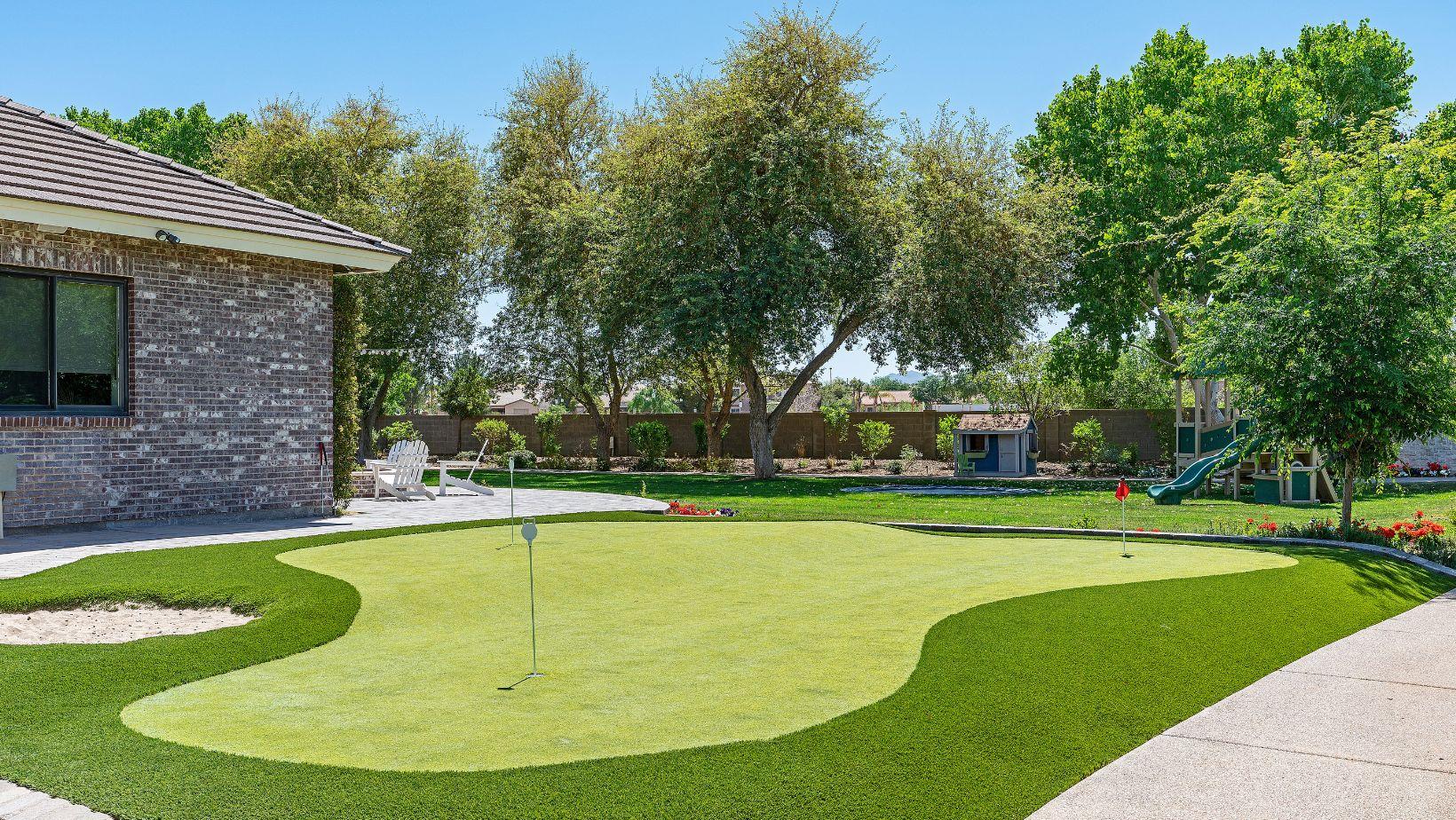
Practical Planning for Artificial lawn and putting greens in the Raleigh Area
Artificial turf means yards can be usable year-round, and a home putting green can turn an underused corner into a daily practice area. In the Raleigh area, where clay soils, humid summers, and the occasional heavy rains are the norm, planning is the difference between a project that looks good for a season and one that performs for years. This guide will walk you through the basics from evaluating your site and selecting materials to creating a realistic short-game setup and maintaining it through the seasons so homeowners throughout the Triangle can make informed decisions. The insights apply to backyards, side yards, rooftops, and shared community spaces in and around Raleigh, including Cary, Durham, Morrisville, Clayton, Willow Spring, and Fuquay-Varina.
Read your site: drainage, shade, and use patterns.
Start with water. Triangle red clay drains slowly. Plan for a sub-base that drains water away from the house and to safe outlets. After a rain, inspect the lawn for any pooling, downspout discharge, and low-lying areas. A gentle 1–2% slope, French drains in wet areas, and catch basins in areas where roof runoff is concentrated help to protect your base from saturation. If you are replacing natural turf, strip it down to the subgrade and fix any grading issues before even thinking about synthetic materials.
Sun and shade matter, too. Full sun speeds drying but increases surface warmth, while mature oaks and pines drop leaves and needles that collect on turf. In shaded areas, airflow helps prevent organic buildup under the turf backing. Consider how the space is used: pets need durable fibers and antimicrobial infill, play areas benefit from shock pads, and a putting green may call for a surrounding fringe to catch errant chips. For a deeper look at product types and layout ideas, review the options available for Artificial lawn and putting greens and match them to your site’s realities.
Choose turf and infill to fit North Carolina conditions.
If your lawn is a family and pet zone, focus on fiber quality and density. Polyethylene blades feel softer underfoot, while nylon is resilient in high-traffic areas such as tee lines or putting surfaces. The face weight (the amount of yarn per square yard) and tuft bind (how tightly the fibers are stitched) determine how well the turf will stand up to traffic and brushing. A layer of thatch in the product adds visual depth and helps infill stay put during thunderstorms.
Infill, the material that is brushed into the fibers, stabilizes blades, supports ball roll on greens, cushions footfall, and affects heat and maintenance. Rounded sand or coated sand are generally fine for most lawns and greens, but TPE or organic options can help reduce surface temperatures on sunny Raleigh afternoons. For putting greens, choose a short, dense pile made for true roll, and adjust the infill depth and brushing to suit your speed. Lighter colored infills and periodic surface rinses can keep temperatures down during the sunniest days when heat is a factor.
Build a base that lasts: subgrade, edges, and seams.s
Excavation is the first step in a durable base usually a few inches of soil for base layers and the turf. Compact the subgrade and place a geotextile fabric to separate the soil from your base aggregate. In our area, use a mix of angular stone fines that tightens up, but drains so the system can handle summer downpours. Compact in thin lifts. Check slope with a level or laser and correct low areas as you go. For greens, build in gentle contours now; micro-adjustments later are done with infill, not with thick spongy base layers.
The edge restraint ensures everything stays tight. Curves are made from bendable aluminum or composite bender board that also prevents base creep. At turf/hardscape borders, ensure that the final height blends well at patios and walkways and does not create trip lips. Seams require special attention. Match your grain. Use the proper seam tape and adhesive. Offset seams from main traffic lines and common putter paths. Trim and lightly stretch the turf, fix at the perimeter, then gradually brush in the infill, checking for any humps or troughs that can telegraph through the surface.
Design a backyard putting experience you’ll actually use
Start with the shots you want to work on. A small green might prefer straight eight- to ten-footers and simple chips, while a larger layout could have subtle slopes, a chipping area, and several places to putt. Keep the slopes on the putting surface subtle. Big breaks are fun once, but get old if you’re trying to develop a consistent stroke. Short side-hill putts can be nestled near the edge without crowding the fringe. If space allows, add a few feet of higher “fringe” or “collar” turf to catch bump-and-run shots and to protect the putting surface from foot traffic during setup.
Speed should match your habits and climate. Faster isn’t always better, especially outside where wind and pine needles add variables. You can control speed by brushing direction, infill depth, and grooming frequency. Also think about safety and flow – keep walkways clear, don’t create hard corners that will create wear patterns, and leave space for a flat stance around each cup. A low-voltage lighting system allows you to practice into the evening without the harsh glare of regular lights. A small storage area for a broom and leaf rake makes maintenance easy.
Care and seasonal upkeep in the Triangle
Routine care is light, but routine. Before leaves, pine needles, and acorns settle into the fibers, sweep or blow them off. A stiff nylon broom or power brush will stand up the blades of turf and lift matted spots. If pets are likely to use the area, rinse regularly and consider an enzymatic cleaner to help control odors. Antimicrobial infills can also help here. After heavy storms, check for displaced infill at edges and re-brush as necessary to keep surfaces even.
Season by season, make small changes. Spring brings a deeper grooming to refresh the pile after winter. Summer means debris control and the occasional rinse on the hottest days to cool down surfaces. Fall means leaves drop get ahead of it so organic material does not compact under the backing. Don’t pry up frost in winter and let the snow melt itself. If you notice seam lift or edge movement, correct it before traffic makes it worse.
Homeowners in Raleigh, Cary, Durham, Morrisville, Clayton, Willow Spring and Fuquay-Varina can achieve long-lasting results by emphasizing site prep, drainage and material selection. Design the base with water use in mind. Choose turf and infill based on the planned use of the space. Design a putting green that will be used often, but won’t require a lot of upkeep. An artificial lawn stays clean, and a backyard green rolls true year-round with simple but consistent maintenance (brushing, debris removal, rinsing from time to time). These thoughtful decisions contribute to everyday use, reliable performance after a storm, and more time to enjoy the space, not care for it.